We are living in what might best be called the Age of Perfidy—an era in which deception is rewarded and meaning is dismissed. Bullshit is in. Truth is out.
The murder of innocent people in Australia—families and community members gathered peacefully to light candles for Chanukah—fills me with sadness and anger. Forty years ago, Meir Kahane warned that this is where things were heading. For saying so, he was banned from the Knesset and ultimately assassinated.
But he was right.
There is a global assault on Jews, driven primarily by radical elements within the Muslim world. Anyone who believes this is temporary hysteria, or that it will simply pass, is being willfully naïve. So far, Jews in the United States—the largest Jewish community outside Israel—have largely been spared. Whether that will remain the case is an open question.
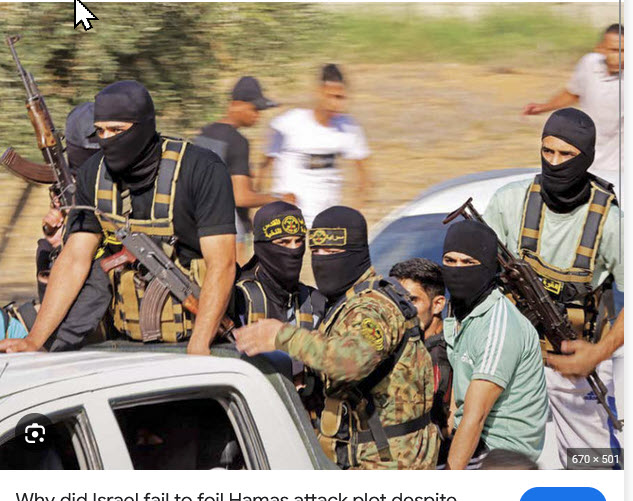
And for those who argue that Jews are safer in Israel, remember October 7, when 1,200 innocent people were murdered in a single day—followed by the deaths and injuries of thousands of Israeli soldiers, most of them young conscripts.
This is not a collection of isolated incidents. As the perpetrators themselves describe it, this is a global intifada.
What Do We Do Now?
The first step is to name the problem accurately.
The second step is to develop a coherent strategy for the Jewish people’s response.
We are not weak. Israel’s military and intelligence capabilities are formidable. Recent events have demonstrated that, on a conventional military level, Israel can strike decisively and effectively.
But military power alone is not enough.
We must also empower the vast majority of Muslims who are not radicalized. Israel has already done this to some extent by integrating Arab citizens into professional life. Today, nearly 25% of Israel’s doctors are Arab, even though Arabs comprise roughly 22% of the population. That is not apartheid; it is inclusion.
We must build alliances with moderate Muslim leadership wherever possible.
However, without clearly framing this struggle for what it is, we lack the intellectual and moral structure needed to sustain a long-term response.
This is not a war that will be won quickly.
When the United States confronted an expansionist and fanatical Japanese military culture during World War II, it did not simply defeat Japan militarily. It occupied the country for decades and focused on systematic reeducation. The result was not just surrender, but transformation—Japan became a stable ally.
Military victory without occupation and reeducation would not have produced that outcome. It also mattered that the United States was universally recognized as the world’s leading power, with the legitimacy to act. History remembers Harry Truman for understanding this reality and acting decisively.
The uncomfortable truth is that the world does not view Jewish leadership in the same way. And part of the reason is that Jews themselves do not see their role that way.
For centuries, Jewish culture evolved inwardly—focused on survival within host societies rather than on global leadership. That mindset was adaptive, but it was never designed to project civilizational confidence.
Worse still, the foundations of Jewish communal strength—family stability and tight-knit communities—have eroded. In the 1960s, Jews had among the highest rates of intact families in the West. Today, Jewish divorce and single-parent rates approach those of the surrounding cultures.
There remain strongholds—particularly within Haredi and Orthodox communities—but they now represent a minority of Jewish life.
This raises a hard question: What are we offering the world?
If we do not restore confidence in uniquely Jewish values—ethical, cultural, and communal—we are not presenting a compelling alternative to radicalism.
I’ve told this story before, but it bears repeating. In the 1980s, a Madison Avenue executive approached the Israeli consulate with a plan to market Israel’s story more effectively. He was met with indifference. Israelis are famously reluctant to admit they don’t already know the answer.
The solution cannot come solely from within Israel.
Jews living outside Israel are disproportionately successful in business, culture, and intellectual life. Not all Jews need to live in Israel. In fact, our strength lies precisely in being an international people.
That is an asset—if we choose to use it.
We are not terrorists. We did not bomb the World Trade Center. We do not hijack airplanes or carry out mass attacks on civilians. We do not seek to impose religious law on the societies in which we live.
Sharia law is fundamentally incompatible with democracy and with due process—the cornerstone of any just legal system.
Israel’s treatment of its Muslim citizens stands in stark contrast to the accusations leveled against it. Separate education systems are permitted. Economic mobility is real. Professional advancement is widespread.
We have a story to tell.
It can be told more clearly. It can be told more forcefully. But only if we are willing to do the work—intellectual, cultural, and strategic—required to confront radicalism honestly and without illusion.
The global intifada is here. Denying it only guarantees that we will lose the opportunity to respond effectively.